A compacted subgrade
Soft surface clay is stripped and the subgrade compacted so the drive sits on firm ground instead of material that pumps and shifts under weight.
Gravel driveway installation in Frisco, TX. A compacted base, proper crown, and drainage built for clay soil so your drive stays firm and level.
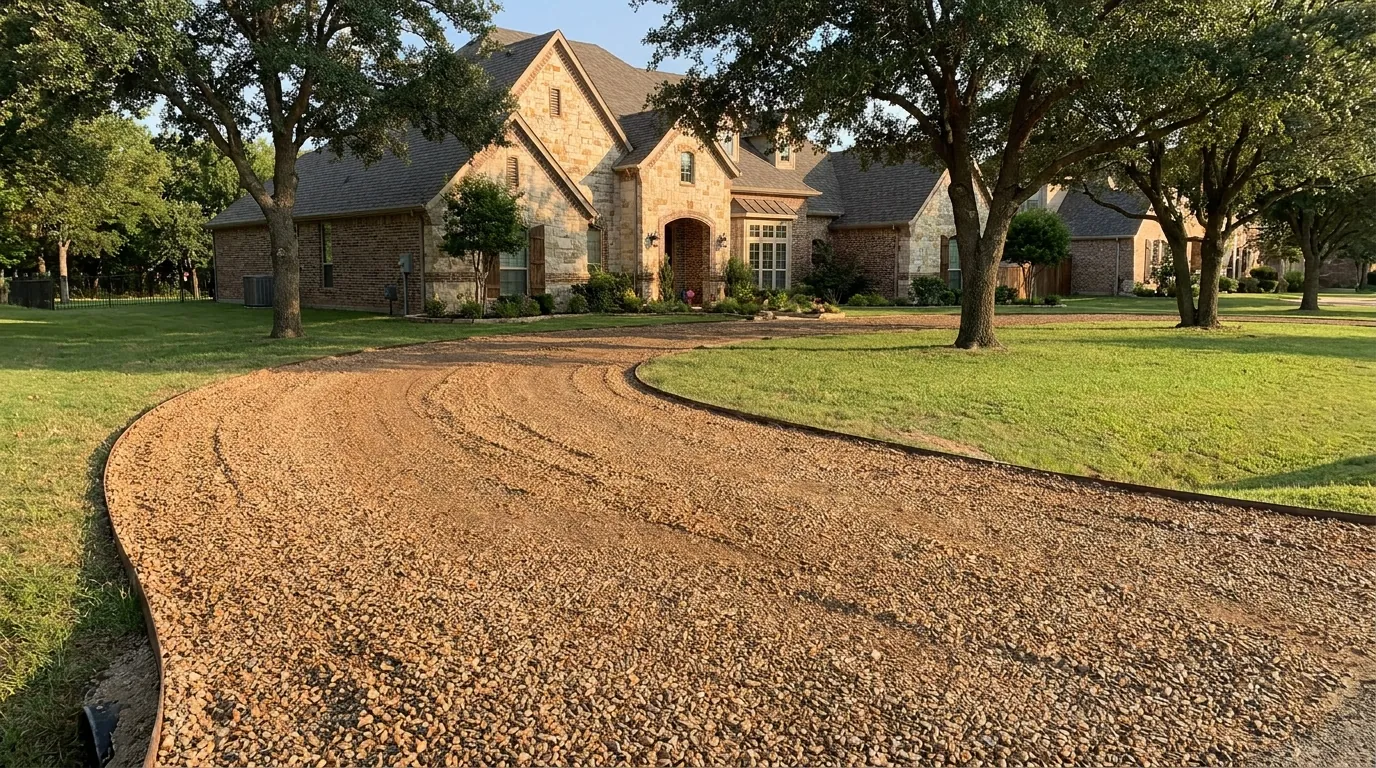
A gravel driveway is a practical, cost-effective way to get a firm surface for vehicles, especially on larger lots and acreage around Frisco. But a pile of gravel spread over raw clay is not a driveway — it's a mud problem waiting to happen. The difference between a drive that lasts and one that ruts and disappears into the ground comes down to what's underneath: a properly cut, compacted base and drainage that keeps water from ever sitting under the surface.
On North Texas clay, that base and that drainage are the whole job. We build gravel drives with a compacted stone base that spreads vehicle loads, a crowned surface that sheds water, and drainage where the drive crosses a water path. When a driveway is part of a larger project, it follows site grading and often shares drainage work with drainage excavation.
The parts you can't see are what keep the surface you can.
Soft surface clay is stripped and the subgrade compacted so the drive sits on firm ground instead of material that pumps and shifts under weight.
A layer of larger crushed stone spreads vehicle loads and keeps the clay below from working its way up into the surface gravel.
The surface is shaped higher in the middle so water sheds to the sides rather than pooling and softening the base.
Where the drive crosses a drainage path, culverts or swales carry water under or around it so it doesn't wash out or pond.
Building a drive that stays put follows this sequence.
The path is cleared and staked, and we check where water crosses it so drainage can be built in from the start.
Topsoil and soft material are stripped and the subgrade is cut and compacted so the base sits on firm ground, not loose clay.
A compacted base of larger crushed stone is placed to spread loads and keep the clay from pumping up into the surface.
The surface is crowned so water sheds to the sides, with culverts or swales where the drive crosses a drainage path.
A finish layer of gravel is spread and compacted to a smooth, drivable surface set into the crowned base.
Expansive clay is the reason gravel drives here need a real base rather than a quick top-dressing. Clay pumps and shifts under repeated vehicle weight, and it holds water at the surface, so a drive built straight onto it works itself into ruts and soft spots fast. A compacted stone base separates the traffic from that clay and gives the wheels something stable to ride on through wet and dry seasons alike.
Frisco's sudden storms make drainage the other make-or-break factor. Water that's allowed to run down or pond on a gravel surface strips the fines and washes the surface into low spots. Crowning the drive and adding culverts where it crosses a swale keeps water moving off it. On a wooded or overgrown route, the work starts with land clearing before any base goes down. Built this way, a gravel drive is designed to stay firm and level for years of use — though no natural surface is ever fully maintenance-free.
Tell us about your route and how you'll use it, and we'll plan a base and drainage built for North Texas clay.
Gravel driveway installation across Frisco and the surrounding area.
Gravel spread on raw clay sinks in, mixes with the soil, and ruts under vehicle weight, especially when wet. A compacted subgrade and a crushed-stone base are what keep the surface separate from the clay and stable over time.
A crown makes the center higher than the edges so rainwater sheds to the sides instead of pooling on the surface. On clay, water that sits on a drive softens the base and pulls the surface into low spots.
A properly crowned drive with culverts or swales where it crosses a water path is built to shed and route storm water rather than wash out. The drainage design is planned around where water actually crosses the route.
Some, yes. Gravel surfaces benefit from occasional regrading and topping up over the years as traffic and weather move material around. A well-built base and crown keep that maintenance minimal, but no gravel surface is completely maintenance-free.