Brush and undergrowth removal
Dense understory, vines, and scrub are cleared so you can actually see and work the ground — often the bulk of the work on a North Texas lot.
Land clearing services in Frisco, TX. Brush, tree, and stump removal to prep lots for building, driveways, and grading across North Texas.
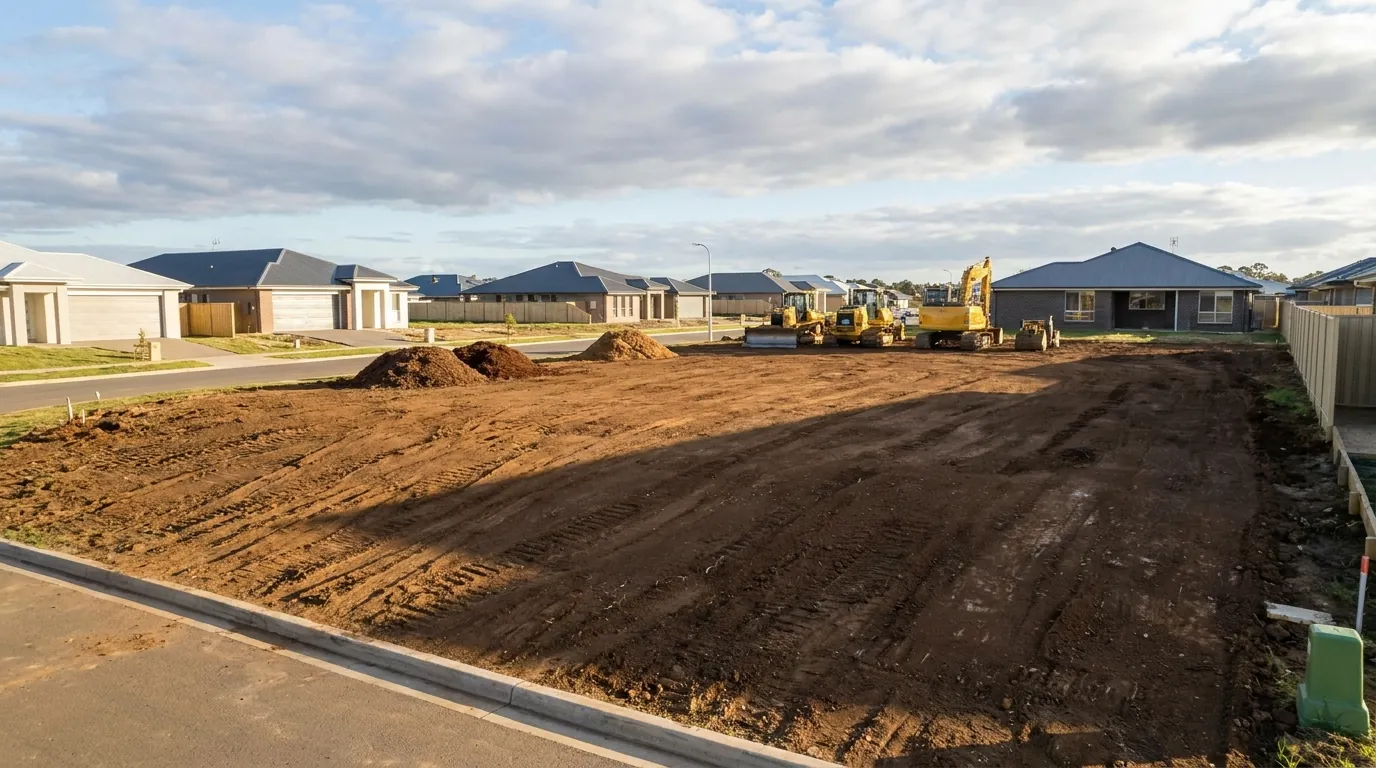
Land clearing is the first step in turning an overgrown or wooded lot into buildable, usable ground. It covers removing undergrowth and brush, taking out targeted trees, dealing with stumps, and leaving the surface in a state that flows straight into grading and construction. Around Frisco, where new development keeps pushing into former pasture and treed acreage, a clean clearing job is often what stands between a raw lot and a project that can actually start.
As a land clearing contractor serving Frisco, Prosper, Little Elm, and the surrounding area, we match the equipment and method to what's actually on your property — a few dense fence rows are a different job than several acres of mixed brush and mature trees. Clearing done thoughtfully protects the trees you want to keep, respects utilities and property lines, and hands off cleanly to site grading.
Most projects combine several of these tasks depending on the lot.
Dense understory, vines, and scrub are cleared so you can actually see and work the ground — often the bulk of the work on a North Texas lot.
Targeted trees are taken down while healthy specimens you want to keep are flagged and protected. Not every clearing job means removing everything.
Stumps are pulled or ground depending on what the ground will be used for next — a building pad has different needs than a pasture.
Cleared vegetation is chipped, piled, or hauled off according to the plan, so you're not left with debris to deal with yourself.
Most clearing projects move through these stages.
We look at what needs to go, what stays, where utilities and property lines run, and where cleared material can be processed or hauled.
Healthy trees you want to save are flagged, along with anything that needs care — overhead lines, septic areas, or steep spots.
Undergrowth, brush, and targeted trees are removed with equipment matched to the density of the growth and the size of the lot.
Stumps are removed or ground depending on your next use, and cleared material is chipped, piled, or hauled off per the plan.
The cleared ground is left workable so it flows straight into grading and pad prep.
The clay soils around Frisco affect clearing more than people expect. After a rain, that clay turns slick and holds machines up, so timing a clearing job around the weather — and around Frisco's sudden storms — keeps a lot from getting torn up with ruts. Dry summer ground clears fast and clean; saturated clay is a different story, and pushing through it creates compaction and damage that grading later has to fix.
Root systems in this soil also matter. Established trees in clay can have wide, shallow root plates, and how those stumps come out changes what the ground needs before it can be built on. When clearing is done with the next phase in mind, the transition to grading and, on a build, to foundation excavation is smooth. Done carelessly, you inherit voids, buried debris, and soft spots that show up as settlement later.
Tell us what's on your property and what you want to do with it, and we'll walk through a clearing plan that gets you there.
Land clearing across Frisco and nearby North Texas communities.
It depends on size, how dense the growth is, and how many trees and stumps are involved. A modest brushy lot can be a day or two, while several acres of mature trees takes considerably longer. A walkthrough gives a realistic timeline.
It depends on the next use. Building pads and driveways need stumps fully out, while a pasture may only need them ground below grade. We match stump work to your plans so you're not paying for more than the site needs.
Material can be chipped into mulch on site, piled for you, or hauled away — whatever fits your project and property. We set the material plan before work starts so there are no surprises.
Yes. Wet clay is slick and rutts easily under equipment, so we prefer to clear when the ground is workable. Timing around storms protects your lot and makes the follow-on grading cleaner.